A construction site is a living, breathing thing – noisy, dusty, and alive with movement. Cranes whirl, trucks rumble, steel clanks, and hundreds of voices shout over the chaos. At the center of it all is the site manager – not firing orders, but putting everything together.
They are the quiet force behind the plans, balancing time and money, safety and accuracy, people and plans. It’s not just about overseeing a build – it’s about having room for dozens of skilled workers to do their best work, while the entire project depends on them staying on track. No pressure. Only responsibility.
But here’s the truth: Nobody wins with a clipboard and helmet alone. Modern site managers don’t just maintain equipment; they also maintain systems.
These are not gadgets. They are a lifeline. They turn guesswork into clarity, chaos into coordination, and last-minute fire into manageable adjustments. The best webmasters don’t just react – they anticipate.
Think of these eight tools as the invisible framework for a successful project. A shared digital dashboard keeps electricians, plumbers, and foremen on the same page. A mobile inspection app turns 30 minutes of paperwork into a five-second tap. Real-time budget trackers stop costs from rising before they happen.
Communication platforms provide a single message that reaches everyone, rather than shouting across the yard. These devices don’t replace human touch – they enhance it. They give the site manager time back, securit,y and the ability to lead from calm, not crisis.
Table of Contents
1. Project Management Software: The Digital Blueprint
Gone are the days when a site manager hunched over a cluttered desk, struggling with rolled-up blueprints that kept slipping off the edge, or jotting down changes in pencil only to have them smudged by rain or dust. Today, the heart of the work is not in a pile of papers – it is in the cool glow of a tablet resting on a saw or hidden in the pocket of a helmet. That device? It’s not just a tool.
This is the central nervous system of the project. Every decision, every delay, every change in plan flows through it, transforming chaos into clarity. Now there is no need to guess who saw which version of the drawing. No more “I thought we took that wall down.” Everything is live, up-to-date, and visible – exactly where it matters.
Imagine: It’s 9 a.m. and a sudden rain stops the flow of concrete. In the old world, the site manager had to call five people, find the supervisor, and maybe even reprint a revised schedule—by afternoon, half the crew is waiting, confused.
Now? The manager opens the app on his tablet, taps “Update Schedule,” and adds a note: “Concrete delayed-recast: 11 a.m., weather permitting.” Immediately, all electricians, crane operators, security officers, and even the customer portal see it. No telephone etiquette. No lost notes. Just an adjustment. It’s not efficiency – it’s dignity. It gives everyone back time and gives the manager his security.
This software not only organizes, but also understands. It tracks how much concrete was ordered versus used, flags when a subcontractor’s invoice is overdue, or highlights a job that’s gone three days behind without anyone noticing.
It turns abstract numbers into visual progress indicators, so you don’t need to be an accountant to see where money flows or leaks. And when the project manager arrives on site at 3 p.m. And ask, “How are you?”
2. A Rugged Tablet or Smartphone: The Office in Your Pocket
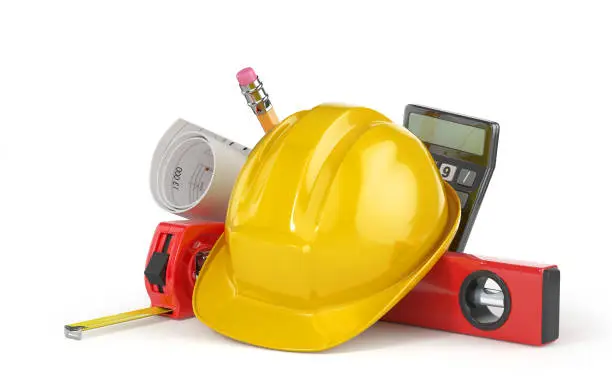
This is not the phone you bought from an operator store. It’s a rugged tablet or smartphone, built like a tank, designed to laugh at spills, soak up drops from the third floor, and keep working when other technology gives up.
Think about it: You’re standing on half a floor, and the frame says, “The beam is lowered two inches.” Do you go back to the trailer, log in, find the right plan, print i,t and come back?
Or do you pull out your sturdy device, swipe up and pull up the drawing, zoom in on the joint, snap a photo, label it with a note – “beam offset on grid C7” – and send it to the structural engineer before lunch? It is not a facility. It’s control. In construction, time isn’t just money—it’s speed. And every minute saved by keeping work going is a minute that keeps the whole project alive.
It’s not just about seeing things – it’s about talking, right then and there. A security threat? A photo with a voice memo: “Level 3, south side railing missing – need to be fixed before 1:00 p.m. A misaligned drain? A quick video, tagged on the right sub, is sent to the foreman. No more lost notes, no more ‘I’ll tell him later.'” The solid unit becomes your voice, your eyes, your memory – all in a waterproof, dust-sealed package.
3. Building Information Modeling (BIM) Software: Seeing the Future
Imagine being able to walk into a building before the first foundations have been laid. Don’t just see it in pictures, but explore every corridor, peek behind walls, and trace the path of a pipe or wire long before it’s installed. That’s what construction Building Information Modeling (BIM) provides – a living, breathing digital twin of the entire project. It’s not just a 3D drawing with fancy graphics. It’s an intelligent model full of data: what each beam is made of, how thick the insulation should be, and even when the HVAC unit needs maintenance.
For the site manager, this is no futuristic nonsense. This is foresight. This is the power to catch problems while they’re still pixels on the screen – not solid, steel, and expensive delays.
One of the quiet superpowers of BIM? Collision detection. Picture this: Plumbing plans show pipes running straight through a structural steel column. On paper, this might go unnoticed until the crew arrived on site, only to realize they couldn’t install it without cutting the supporting metal.
In the old world, it’s a week of rework, thousands in extra costs, and a wave of frustration throughout the team. But with BIM, the software automatically sees conflicts before construction starts. The model flags it, the design team adjusts, and the problem goes away before anyone can swing a hammer. This is just not smart planning. This is the best prevention of risk.
And then there is understanding. Construction is not just about skilled workers – it’s about a shared vision.
4. Construction Drones: The Eye in the Sky
The construction site is a vast, ever-changing landscape – hard to see completely from the ground, even if you walked around every corner. This is where the drone comes in – not as a gadget, but as a new set of No more looking at blurry pictures from a phone held at arm’s length.
With a simple push, the drone rises, glides over the construction site, and returns with a crystal-clear aerial map, a time-lapse of progress, or a close-up of a broken parapet that no one on the ground ever noticed.
Every week, the drone flies the same route – like a faithful sentinel – capturing the same angles, the same light, the same shadows. When you compare these images side by side, the progress is indescribable…it is undeniable.
A customer can watch in the 30-second video as the foundation becomes a frame, the frame becomes walls, and the walls become a building. No PowerPoint slides. No obscure updates. Absolutely true, touching. And for the boss? It turns into “How’s it going?” “Here’s exactly where we are—and how far we’ve come.” This kind of openness builds trust faster than any meeting.
Security isn’t just a Construction checklist – it’s a responsibility. And sometimes the most dangerous places are also the hardest to reach: the edge of a high roof, the bottom of a bridge, the top of a crane tower. Sending an employee there for inspection involves risk.
Sending drones? It means clarity without danger. A quick aerial scan can detect loose materials, unstable edges, or even missing safety harnesses left before someone gets hurt. The drone does not get tired. It does not hesitate. It just watches.
5. Digital Safety Management Tools
Safety on a building site isn’t something you tick off a list – it’s something you live by. Every day, workers climb, lift, drill, and walk in places where one slip, one lost bolt, one unmarked trench can change everything. Checklist for paper? They get stuck in pockets, washed away by rain, or forgotten on a clipboard in the trailer. Digital security tools not only modernize security but also humanize it.
They transform security from a bureaucratic endeavor into a common language where all workers, from novices to veterans, can speak at the touch of the phone. No hesitation now. No more fear of being ignored. Just a quick photo, a short note – “Loose handrail near stairs, level 4” – and it’s on the manager’s screen before lunch.
It’s not about tracking compliance. It’s about trust. When a worker can photograph a broken cable and know that someone will see it, respond, and fix it within an hour, he feels seen. They feel valued. And that changes the culture. Safety is no longer something management imposes – it has become something the whole team owns.
The app does not penalize. It strengthens. This makes each worker a guardian of the site. And when the manager sees the threat report pop up, they not only fix the problem, but they also thank the person who brought it to their attention. That small act – acknowledging the voice behind the report – creates a culture where security is simply not necessary. It is respected.
And when something goes wrong, the digital disc becomes your cool shield. Not to hide, but to respect. Every inspection, every training session, every omission is logged with time, date, and signature – it’s not just paperwork. It’s proof that you cared. That you didn’t wait for the tragedy to happen. That you showed up every day, with intention.
6. Reliable Communication System: Keeping Everyone Connected
A construction site is not only noisy – it is alive with sounds, machines, and movement. Framers call for jackhammers. Electricians wave from scaffolding. Crane operators give signals with hand gestures lost in the air. In this chaos, a simple phone call will not solve the problem.
Some lessons may be missed. A shouted instruction can be drowned out by the dumper retreating. What a site manager really needs is clarity, not just more noise. That’s why the best teams don’t rely on luck. They depend on systems: solid two-way radios that still work in basements, group messaging apps that ping everyone at once, and the quiet rhythm of the daily grind where people actually listen to each other.
Picture this: The framing team finishes their section just before lunch. Electricians are waiting, the equipment is ready, but no one told them. In the old way, you had to locate the supervisor, find a phone signal, and hope he would answer. In a new way?
The site supervisor presses a button on his radio: “Electrician, Area B is ready – safe to start.” And just like that, the work continues. No delay. No confusion. No wasted hours. It’s not efficiency – it’s respect. This tells all teams that your time matters. Your work matters. I won’t keep you waiting because I forgot to speak.
And when something goes wrong—when a pipe bursts, a beam is misaligned, or a worker trips over an unmarked hazard—the difference between a small hiccup and a complete shutdown is communication. A good system doesn’t just send orders.
It invites cooperation. The manager should not be the only problem solver. They can have a quick conversation: “Plumbers, fitters and plumbing – meet at five o’clock on grid D3. We have a conflict.” Within minutes, the right people will be there, talking face to face to find out. no error. no guilt.
7. A Good Old-Fashioned Notebook and Pen
In a world of flashing screens and synchronous clouds, it can seem old-fashioned – almost poetic to carry an old notebook in your pocket, its edges worn by hard caps and dust, its pages smeared with pencil and coffee rings. But ask an experienced site manager and they’ll tell you: This isn’t nostalgia. This is necessary.
When the tablet shuts down mid-inspection, the app freezes while the supervisor explains last-minute changes, or when the rain turns the phone into a paperweight—the laptop is still there. quietly. reliable. Ready. No reboot. No update. No questions necessary. Just ink on paper, and the calm knowledge that you won’t lose what matters.
There is a rhythm to handwriting that technology cannot recreate. A quick sketch of the modified beam louver on the back of the receipt? Done in three seconds. A note to the carpenter: “Move outlet 6 to the left – clear door frame”?
Written as you go, not while fumbling with a screen. Putting pen to paper doesn’t just record information – it anchors it. Your brain remembers what you write. Not because it is forced, but because movement connects thought to action. That doodle of a ladder? It’s not just a sketch. It is a memory. And in the chaos of the place, the small anchors keep you grounded.
It is also extremely personal. That notebook isn’t just a log—it’s a diary of the project’s heartbeat. Written question about the time for concrete casting. The name of the subcontractor who arrived early. Sketch of window details that finally clicked.
These are not just notes. These moments are the quiet truths that never become digital reports, but shape the project just the same. When you scroll through at the end of the week, you not only see the tasks completed, but you also see the history of how the week ended.
8. Strong Construction Leadership and Problem-Solving Skills: The Human Tool
Technology Construction gives you data, but it doesn’t give you presence. It does not know when the foreman is tired, when the new apprentice is afraid to speak, or when the concrete truck is delayed because the driver’s child is sick.
This is where the real work begins. The best site manager isn’t the one with the fanciest tablet – it’s the ones who know when to stop, listen, and say: “Tell me what’s really going on”. It is not management. It is leadership.
Every day on a construction site is full of surprises. One beam does not fit. The weather changes. A subcontractor discovers a buried wire that they were not told about. These are not mistakes – they are just part of the rhythm.
What separates a good manager from a good manager is not their ability to avoid problems. It is their ability to remain calm while things are happening. No panic. no error. Just clear thinking, quick decisions, and quiet confidence that says we will figure it out. And because they stay stable, the crew stays stable too.
They are not stable. They are not in a hurry. They follow. Because they trust the person who leads them – not because of title, but because of character.
Leadership isn’t just about fixing things – it’s about lifting people. A motivated team doesn’t just work hard. They work smart. They take care of each other.
They talk about security. They appear quickly. And that culture does not develop from any policy manual. It grows from a leader who remembers names, thanks people by name, shares coffee with the ironworker at 7 a.m., and admits when they don’t have all the answers.
9. Conclusion: Construction Building a Better Future
The role of site manager has changed – not because the job has become easier, but because it has become deeper. It is no longer enough to know how to read blueprints or bark orders at a hammer. Today’s best leaders are storytellers, data interpreters, and silent leaders at the same time.
They don’t just manage tasks – they stitch together digital models, real-time drone footage, cloud-based schedule,s and the live experience of each worker on site. It is not about replacing the handmade building craft. It’s about raising it. Every tool—from BIM to robust tablets to security apps—isn’t just technology; It is an extension of their care, their vision, and their commitment to get it right.
What makes this new era powerful is not the gadgets themselves, but how they restore humanity in the process. When a drone captures roof progress and the manager shares it with the customer over a quick video call, it’s not just a report – it’s a proud moment.
The real skill isn’t mastering software—it’s knowing when to look at a screen and when to look an employee in the eye. It makes sense that a 3D model can show you where the pipe hits the beam, but just conversation can tell you why the electrician is hesitant to talk.
The best leaders don’t treat technology as a substitute for intuition—they treat it as a partner. They let the data guide them, but let their decisions guide them. They use analytics to predict delays, but they trust
Do I really need digital tools if I’ve managed sites for years with paper?
Absolutely. While experience is invaluable, digital tools prevent costly mistakes, reduce delays, and keep everyone aligned—turning your hard-earned intuition into scalable, repeatable success.
Isn’t a rugged tablet too expensive for a small project?
It’s an investment, not a cost. One avoided delay or safety incident pays for the device many times over—and it protects your team, your reputation, and your bottom line.
Can a site manager really lead without being tech-savvy?
You don’t need to be an engineer—you just need to be willing to learn. The best managers aren’t the ones who know all the tech… they’re the ones who know how to use it to serve their team.