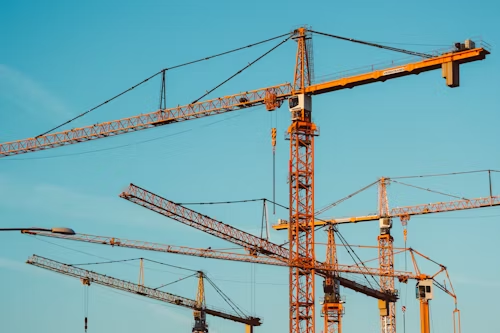
The house where you drink your morning coffee, the office where you stare at the screen between meetings, the bridge you cross to work, the school where your children go every day – none of these appeared. They started as a sketch. Maybe on a handkerchief. Maybe in a notebook. Perhaps whispered over coffee between a designer and a client who just wanted a better space.
And then – somehow – it became real.
Construction is not just about hammers and helmets. It is not just steel beams that rise towards the sky or cast concrete into forms. It’s human, it’s messy. It is late at night, there are dirty shoes, and there are arguments about where the socket should go. It is the electrician who stays an extra hour because the family needs heat before winter. It is the supervisor who remembers the name of each individual worker. It is the architect who changes the angle of the window so that the morning light falls properly into the kitchen.
The best projects don’t win because they had the biggest budget or the most attractive design. They won because the team talked to each other. Because when something seems wrong, someone speaks up. The plumber and the carpenter sat down and came up with a solution that no one had thought of. Because.
Table of Contents
1. Lay the Foundation with Meticulous Pre-Construction Planning
You might by no means start a protracted road ride without a map, and you should by no means smash ground on a construction site without an exhaustive pre-construction plan. This is the unmarried maximum essential section, the blueprint for the entirety that follows. Rushing this level is the maximum common reason initiatives fail, go over the price range, or get stuck in endless delays.
Think of pre-creation as the “homework” segment of the development process. It entails:
Detailed Design and Blueprints: Every wall, cord, and pipe ought to be drawn and agreed upon. This is where architects and engineers work closely to make certain the design isn’t handiest beautiful but also structurally sound and buildable.
Accurate Cost Estimation: A sensible price range is created, accounting for substances, hard work, equipment, permits, and a contingency fund for the unexpected. A flawed estimate right here can hang up the entire production mission.
Feasibility Studies: Is the land suitable? Are there environmental issues? This step ensures the imagination and prescience is possible on the selected website.
Identifying Potential Risks: What could go wrong? Will there be a terrible climate? Could material expenses spike? By identifying these risks early, the team can create plans to mitigate them.
A thorough pre-production phase units a clear, shared vision for everybody concerned. It aligns the proprietor, the architects, and the development managers, making sure that after the physical creation starts, the entire crew is on the same path. This careful planning is the primary and most important step in the construction of a hit task.
2. Embrace Technology: The Digital Transformation of Construction

For an industry known for its physical nature, a quiet technological revolution is underway. The construction sector is being transformed by digital tools that make projects smarter, safer, and faster. Ignoring this digital transformation is like trying to build a modern skyscraper with only hand tools.
The key technologies that are now fundamental to modern manufacturing are:
Building Information Modeling (BIM): It is the superstar of modern construction. BIM goes beyond 2D plans to create intelligent 3D digital models of the building. This allows the team to virtually build the structure before the shovel hits the dirt. Consider that conflicts between plumbing lines and electrical lines can be found and corrected on the computer, saving thousands of dollars and weeks during the actual construction. BIM is revolutionizing the nature of construction planning.
Project management software: Cloud-based platforms keep everyone connected. From the project manager in the office to the foreman on the construction site, everyone has real-time access to schedules, budget updates, design changes, and task lists. This seamless communication is essential to coordinate the complex requirements of a construction project.
Integrating these devices isn’t just a fancy upgrade; This becomes important for competitive and efficient production. This digital construction management approach ensures that the vast amounts of data generated by a project are used to make better decisions every day.
3. Prioritize Communication and Collaboration
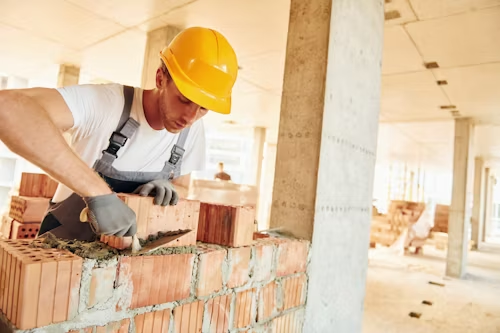
You can have the high-quality blueprints, the most professional people, and the tightest price range; however, if the people on web website aren’t speaking to each other, the whole thing falls apart. Construction isn’t just about pouring concrete or running wires. It’s approximately humans. Architects who don’t listen to the electricians would possibly lay out a wall that blocks a panel. Plumbers installing pipes without understanding where the structural beams are? That’s an expensive surprise. A foreman who doesn’t understand the schedule change? Delays pile up. And nobody wins.
The exceptional production groups don’t just display up and do their task — they display up together. They start every day with a short huddle, not a lecture — just 10 minutes status at the website online, checking in: What’s taking place today? What’s blocking you? Did you notice the up-to-date drawing? No fancy software program needed. Just eyes on every other, voices heard. That’s how troubles get stuck before they become screw ups.
They also ensure everybody is aware of where to find the real information — no longer five exclusive PDFs scattered throughout emails, not scribbles on a napkin, however one place every person trusts. A shared force. A pill at the trailer. A whiteboard that gets updated every morning. When you realize where to look, you stop wasting time playing cellphone tag or guessing who said what.
And right here’s the magic: they tear down the partitions among trades. The carpenter asks the plumber how the pipe run impacts the framing. The electrician walks the website with the venture manager and says, “This conduit doesn’t match — right here’s what could paintings better.” That’s not overstepping. That’s possession. That’s why the whole mission stops being a sequence of remote responsibilities and starts feeling like one residing issue — built by way of individuals who care enough to concentrate, to evolve, to restore things collectively.
4. Implement Robust Risk Management
Let’s be real – a construction site never turns out exactly as you planned.
On the day the concrete is to be poured, you wake up to heavy rain.
The steel van is never seen.
The soil does not behave as indicated in the soil report.
Someone gets hurt after hitting a rope.
These are not rare disasters. They are only on Tuesday.
And the best leaders don’t sit around and hope everything will work out. They know better. They’ve been ruined before – by delays, by budget overruns, by avoidable mistakes that could have been caught earlier. Therefore, they do not leave things to chance. They plan things before they happen.
It starts with asking a simple question: What can go wrong?
Not to scare people. At worst, don’t play all day. But to see clearly. To prepare.
They get their team together—not just the bosses, but the people on the ground who are actually building this thing—and talk about it. What happens if the faucet breaks? What if the inspector is late? What if we don’t get the special tile until next month? They write it down. no play. Just the facts.
Then they ask: How bad will it be? And how likely is that?
Some risks are big but rare – like fire. Others are minor, but happen all the time – such as missing equipment or miscommunication about change orders. This helps them decide where to focus. You don’t need a full emergency drill for every little thing, but you do need a solid plan for the things that could really derail the project.
And then comes the smart part – they take action now to prevent problems before they escalate.
That might mean ordering key ingredients two weeks in advance, even if it costs a bit more to store them. Perhaps this means doing another safety check on the scaffolding after high winds. Or set up internet backup so the digital plan is still loaded
5. Focus on Sustainable and Green Building Practices
The truth is that every building we build leaves its mark – on the land, in the air, on the resources we borrow from the future. For decades, construction was about speed, cost, and getting it done. But now more and more people are asking: What kind of world are we building for the next generation?
It’s not just about being “environmentally friendly” or ticking off certification. It’s about understanding how we create things – deeply. The materials we choose, the energy we waste, the water we waste, the trash we pile up – all of it. And smart builders today are starting to see that doing better isn’t just ethical… It’s practical. It is profitable. It’s just smarter.
Take, for example, energy use.
A building does not have to be a furnace in winter or a furnace in summer. Good design means letting the sun naturally warm the floors, using windows that keep the heat in – not out – and insulating the walls so you’re not literally throwing money out of the attic. It’s not about fancy gadgets. It’s about common sense. A well-placed window, a thick layer of insulation, shade from trees – these are not luxuries. They are cool, long-term investments that keep electricity bills low and comfort high. People notice. They last longer. They feel better.
Water is also no longer something we treat as if it were infinite.
Smart places now collect rainwater to flush toilets or water landscapes. Low-flow faucets, double toilets, drip irrigation – these are not gimmicks. Those are the requirements. In places where the drought is getting worse, building with water in mind isn’t just green – it’s survival.
And that’s what we build with.
Why transport steel and concrete across the country when we can use wood from responsibly managed forests? Why throw away scrap plaster when it can be recycled and made new
6. Invest in Your People: Training and Safety
And yet, too often, people are treated as interchangeable parts. Like screws in a machine that can be replaced if they become worn or cool. But the truth is that the most valuable thing in any workplace is not the equipment. This is the person who shows up every morning – rain or shine – because they care about getting it right. That’s the real engine. And if you want the project to succeed, you don’t just control that engine—you nurture it.
This means training—not just a one-time orientation, but of the ongoing, real, practical kind.
The technology changes. Tools evolve. BIM software updates. Security protocols have gotten smarter. And if your team doesn’t learn along the way, they’ll fall behind—not just in skills, but in confidence. When you invest in training, you don’t spend money. You give people the opportunity to do their best. A carpenter who learns to read digital models not only works faster, but he also feels smarter. A welder who masters a new technique doesn’t just complete a joint – they’re proud of it. And when people feel capable, they stop. They appear quickly. They help each other. They don’t just follow orders – they are masters of the job.
But training alone is not enough.
Because no skills mean anything if you don’t feel safe.
There is no poster on the security wall. This is not a checklist you sign and forget. This is a culture where a new hire feels confident enough to say, “That ladder looks wobbly,” without fear of being ignored. This is what happens when the foreman stops working because someone’s gloves get ruined
7. Meticulous Budget and Schedule Management
It sounds simple. But in practice, it’s like walking a tightrope – one wrong move, one late delivery, one last-minute change, and the whole thing starts to wobble. There is no magic formula. No one app will fix everything. Just a lot of quiet, consistent attention – day after day – from the people who have to put it all together.
This is where the construction manager comes in.
Not like a boss barking orders, but like a steady hand keeping the ship from running aground.
They don’t just look at the numbers once a week. They look at them like a gardener looks at the soil – noticing when things are dry, when they are too wet, when something is bad. Each wooden box that arrives. Logged every hour by an electrician. Each rental of a jackhammer or forklift. It’s all tracked. Not because anyone is watching – but because if you don’t know where the money and time is going, you’re blind.
And when things start to go astray—when the delivery of drywall is delayed, or the foundation takes longer than expected—the best leaders don’t wait. They don’t expect it to get better on its own. They don’t bury it until the end of the month. They call it hooliganism. right then. They say, “We have a problem. This is what happened. This is what it means. What do we do?”
Because hiding the delay doesn’t make it go away.
This makes it bigger.
And that eats away at the trust between the crew, the customer, and the subcontractors.
Change is part of the job. A customer decides they want a different countertop. A pipe flows where it shouldn’t. The storm causes power outages for two days. these are
8. Building a Better Future, One Project at a Time
Building something — a home, a college, a health center, a bridge — isn’t just about stacking materials. It’s about turning a wish into a structure. It’s the quiet second when a toddler runs through a newly finished hallway, or a nurse walks into a brighter, quieter ward after a protracted shift, or a family sits on their porch for the first time watching the sunset. Those moments don’t take place through twist of fate. They’re the result of thousands of small selections — made by way of folks that cared enough to do it right.
The destiny of construction doesn’t need to be louder. It doesn’t need to be larger. It just wishes to be better.
It’s about selecting to plot with care, not just speed.
It’s approximately the usage of technology no longer to update human beings, but to present them higher gear — with the intention to paintings smarter, not harder.
It’s approximately speaking up whilst something doesn’t make sense, rather than staying silent because “that’s how it’s always been.”
It’s approximately searching ahead — no longer simply at the following deadline, but at the subsequent hurricane, the next technology, the next life, in order to stay inside these partitions.
It’s approximately spotting that sustainability isn’t a buzzword — it’s a duty.
That safety isn’t a coverage — it’s a promise.
That investing in people isn’t a price — it’s the only component that makes the paintings meaningful.
We’re no longer simply laying bricks or pouring concrete.
We’re shaping the areas in which recollections are made.
Where human beings heal.
Where kids research.
Where workers come domestic tired, tired but proud.
1. Why are these seven strategies more effective than traditional construction methods?
These strategies focus on the human and systemic side of building — not just speed or cost. By prioritizing communication, safety, sustainability, and team investment, projects run smoother, waste less, and deliver higher quality results that last longer and cost less over time.
2. Do I need expensive technology to implement these strategies?
No. While tools like BIM or project software help, the real power comes from simple practices: daily huddles, clear documentation, proactive safety talks, and treating your team with respect. Technology supports — it doesn’t replace — good human habits.
3. Can these strategies work for small home builds, not just big commercial projects?
Absolutely. Whether you’re building a single-family home or a skyscraper, the core principles — planning, communication, risk awareness, and valuing people — apply universally. In fact, small projects often benefit the most, because they have less room for error.