For generations, building has meant boots on the ground, sawdust in the air, and the steady rhythm of hammers and cranes. You designed it on paper, dug into the ground,d and put it together – beam by beam, brick by brick. It was honest, physical work, based on sweat, skill, and instinct.
But lately, something has changed.
The old way – although still important – is not enough to meet the world’s growing needs. Many projects go over budget. Many deadlines are missed. Many people’s lives are at risk. And the planet can no longer afford the waste.
Now a quiet revolution is emerging on construction sites around the world – not with louder noises, but with smarter tools. Drones hover above and map the terrain in minutes. Robots lay bricks with tireless precision. Sensors buried in concrete tell engineers how it hardens – before cracks form. Entire buildings are designed in 3D, then printed layer by layer like a giant, life-sized 3D puzzle.
This is not about replacing the craftsmen who have built our cities for centuries. It’s about giving them better eyes, steadier hands, and fewer sleepless nights worrying about what could go wrong.
From the first sketch to the final recycling of materials, each step becomes more coherent, more efficient, and more humane.
Because the construction of the future is not just about strong walls or tall towers.
It’s about building smarter, building faster, and most importantly, building with care.
Here are five breakthroughs that are leading that charge… and quietly reshaping us.
Table of Contents
1. The Digital Twin: A Virtual Rehearsal for Physical Construction
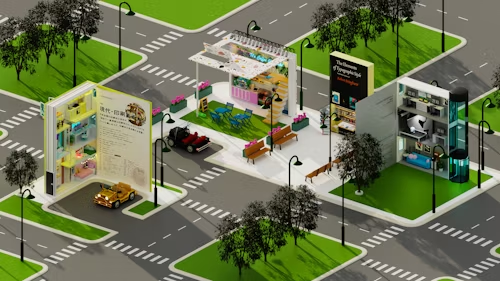
Imagine being able to build a house…twice.
Once in the real world – with steel, concrete,e and sweat.
And once in the digital world – fully detailed, alive with data and infinitely testable – before you even lay a single beam.
This is the idea behind something called a digital twin. It’s not just a fancy 3D model you move around the screen. It’s a living, breathing digital version of a building – or a bridge, a factory, even an entire city – that mirrors its real-life counterpart down to the last detail. And as the physical structure changes, so does the twin – updated in real time, like a heartbeat synchronizing between two worlds.
Why does it matter? Because construction has always been a high-risk, learn-as-you-go game. Mistakes are costly. A misplaced pipe, a ventilation clash, a structural inspection – it can mean weeks of delays, mountains of wasted material, and frayed nerves all around.
But with a digital twin, you have to practice it all first. Architects, engineers, even future tenants can walk around the virtual building together, spot problems ahead of time, and make changes to the design, while it’s still just data—not plaster. It’s like a time machine that lets you cure yesterday’s headache today.
And the magic doesn’t stop when the ribbon is cut.
2. Robotics and Automation: The Rise of the Robotic Workforce
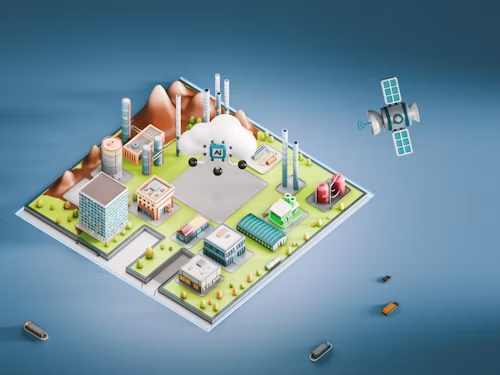
For decades, the heartbeat of any construction site has been human: workers under the sun, transporting materials, laying bricks, shaping steel with calloused hands and hard-earned skills. That image still rings true—but it’s starting to change, not to erase the human touch, but to protect it.
Enter robotics – not as a replacement, but as a partner.
In future-oriented workplaces today, you will find mason robots that can place thousands of bricks in a single day, with a steady hand that never gets tired and precision down to the millimetre. Autonomous bulldozers slide across fields and grade land not based on guesswork, but based on digital blueprints, moving earth more safely and efficiently than ever before. And then there are 3D printers – huge, beautiful arms that “paint” entire walls into concrete layer by layer, creating curves and shapes that would be nearly impossible (and wildly expensive) using old school methods.
All this comes at a crucial time. The industry is facing a real crisis: There are not enough skilled workers, and there are too many dangerous jobs that keep people away. Robotics is not about taking over these jobs – it is about replacing them.
In other words, the job is not dying – it is developing. And by doing so, it becomes safer, more sustainable, and more attractive to a new generation that has grown up with tablets in their hands and code in their curiosity.
This is not a future where robots will build alone. This is a future where human judgment meets machine accuracy – where possible
3. Sustainable and Self-Healing Materials: Building a Greener World
For a long time, building the world meant doing something with it—cutting down forests, mining mountains, pouring concrete that released more carbon into the air with each slab. And while these materials gave us cities, homes, and schools, they also left a heavy footprint on the planet.
But now something beautiful is happening: we learn to create with nature, and not only with nature.
Take pulpwood – specially engineered wood that is so strong that it can replace steel and concrete in intermediate construction. This is not your grandmother’s wood. Products like cross-laminated timber (CLT) are fire-resistant, incredibly stable, and here’s a quiet miracle – they lock in carbon instead of leaking it out. Each ray becomes a small vault for the atmosphere’s surplus of CO₂. So when you build with wood on a large scale, you’re not just building a structure – you’re quietly helping to fix the climate.
Then some materials heal themselves. Scientists have created a type of “living concrete” that contains harmless bacteria that sleep inside the mixture as little guardians. When a fissure forms and it starts to rain, they wake up and get to work – secreting limestone to bridge the fissure from within. No jackhammers, no patches, no decades of expensive repairs. Just a building that quietly and patiently takes care of itself over time.
And it doesn’t stop here. Windows that act as solar panels. Brick made from recycled plastic extracted from oceans and landfills. Paint that cleans the air. These are not distant dreams – they are already being tested, built, and lived.
4. Modular and Prefabricated Construction: Building Like Lego
You’ve probably seen these videos: An entire apartment building is erected in a matter of weeks, as cranes slowly slide into fully finished rooms like giant puzzle pieces. It looks like magic – but it’s actually a brilliant old idea, reborn for the modern age: modular construction.
And benefits? They are real – and deeply human.
There won’t be months of delays due to sudden storms. No more mountains of wasted wood and plaster because someone mismeasured due to Tuesday’s high winds. At the factory, everything is cut using digital equipment, assembled with care, and inspected before it leaves the floor. outcome? High quality, less waste, and a timeline you can really trust.
For neighbours, this means much less noise, dust, and chaos. The construction site becomes a quiet staging area – not a disturbance that lasts for several months. For workers, this means safer, more stable jobs in controlled environments, away from the dangers of heavy lifting or unstable scaffolding in extreme weather. And for cities facing a housing crisis? It’s a lifeline – providing a way to build good quality homes quickly and at scale, without disruption.
Modular construction is not about removing the soul from the building. It’s about bringing more care, sustainability, and compassion to the process – so we can put more people in better places, without harming workers or the planet.
5. The Power of Data and AI: The Brain of the Smart Site
For generations, the construction has been carried out on gut feeling, experience and a little crossed fingers. You planned as best you could, then braced yourself for surprises: shipment delays, sudden heavy rains, misread blueprints. But today something powerful is changing that history—not by replacing human judgment, but by giving it a whole new vision.
that power? Data – and artificial intelligence that helps us understand them.
Every modern workplace is buzzing with information: drones surveying the land from above, sensors tracking how much concrete has been used, cameras monitoring for safety, digital models showing every pipe and wire before it’s installed. Alone, it’s just noise. But with AI, it becomes insight.
Imagine an algorithm that detects a pattern you can’t recognize: “Based on the weather forecast and vendor delays, your framing team will be inactive in two weeks—let’s reshuffle the schedule now.” Or a camera that detects a worker entering a high-risk area without a helmet and sends an instant alert – not to punish, but to protect.
Even the design process is getting smarter. Architects can now tell a computer, “This is our budget, this is the place, and we have to produce as much energy as it uses.” AI then discovers thousands of design possibilities overnight – some extremely creative, others extremely simple – and offers options that no one would have thought of on their own. It is not designing the building for them; It expands what is possible.
It is not about turning manufacturing into a cold, automated machine. It’s about guidance rather than guesswork, clarity rather than chaos, and quietly correcting costly mistakes before they happen.
In a way, AI is becoming the silent partner in every workplace: the one that never sleeps, never misses a detail, and always has your back. It does not replace the so-called.
6. Building Forward: The Path to Widespread Adoption
Let’s be real: changes in construction don’t come easily. For decades, this industry has run on tradition – on relationships built in workplaces, on blueprints drawn at sawmills, on the unspoken rhythms between the disciplines that only years of experience can teach. So it’s no surprise that for some people, moving into a world of digital twins, robots, and artificial intelligence can feel like speaking a new language overnight.
But the thing is: the world can’t wait.
We face urgent needs – affordable housing for growing cities, robust infrastructure in a changing climate, safe workplaces for the people who build our world. And the old playbook is no longer sufficient.
Good news? The tools we have now promise not only incremental improvements, but also transformation. Secure websites. Make cleaner. less waste. Fast deadlines. Buildings that think, adapt, and even heal. And perhaps most importantly, the chance to make construction a career that will attract, rather than exhaust, the next generation.
It’s not about destroying the past. It’s about respecting the craft while embracing what is possible. The phrase “We can’t do it” is quietly replaced by something more powerful: “We haven’t done it that way yet…”
Because the production of the future is not just about making more of the same.
It’s about doing better – smarter, greener, together.
1. What is the biggest benefit of modern construction tech?
It makes building faster, safer, greener, and more cost-effective—while reducing waste and improving quality.
2. Are these innovations only for big projects?
Not at all! Many—like modular components and smart tools—are increasingly accessible for small and mid-sized builds, including homes.
3. Will technology replace construction workers?
No—it’s transforming their roles. Workers are becoming tech-savvy operators, technicians, and problem-solvers, leading to safer, more skilled careers.